
Intelligent Building Solutions
Building Management & Energy Systems
Centralized, computer-based platforms that control and optimize HVAC systems — enhancing efficiency, reducing energy costs, and ensuring occupant comfort from day one.
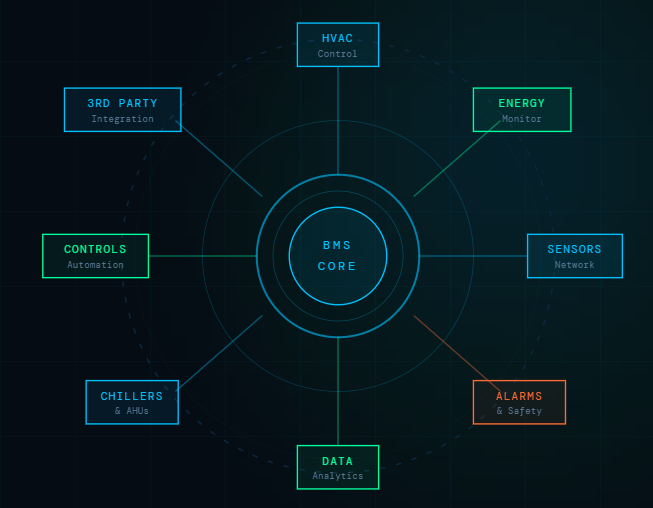
30% Energy Cost Reduction
24/7 Real-Time Monitoring
100% Adaptable to Client Needs
3rd Party System Integration
Building Management System
BMS / BAS
The Brain of Your Facility
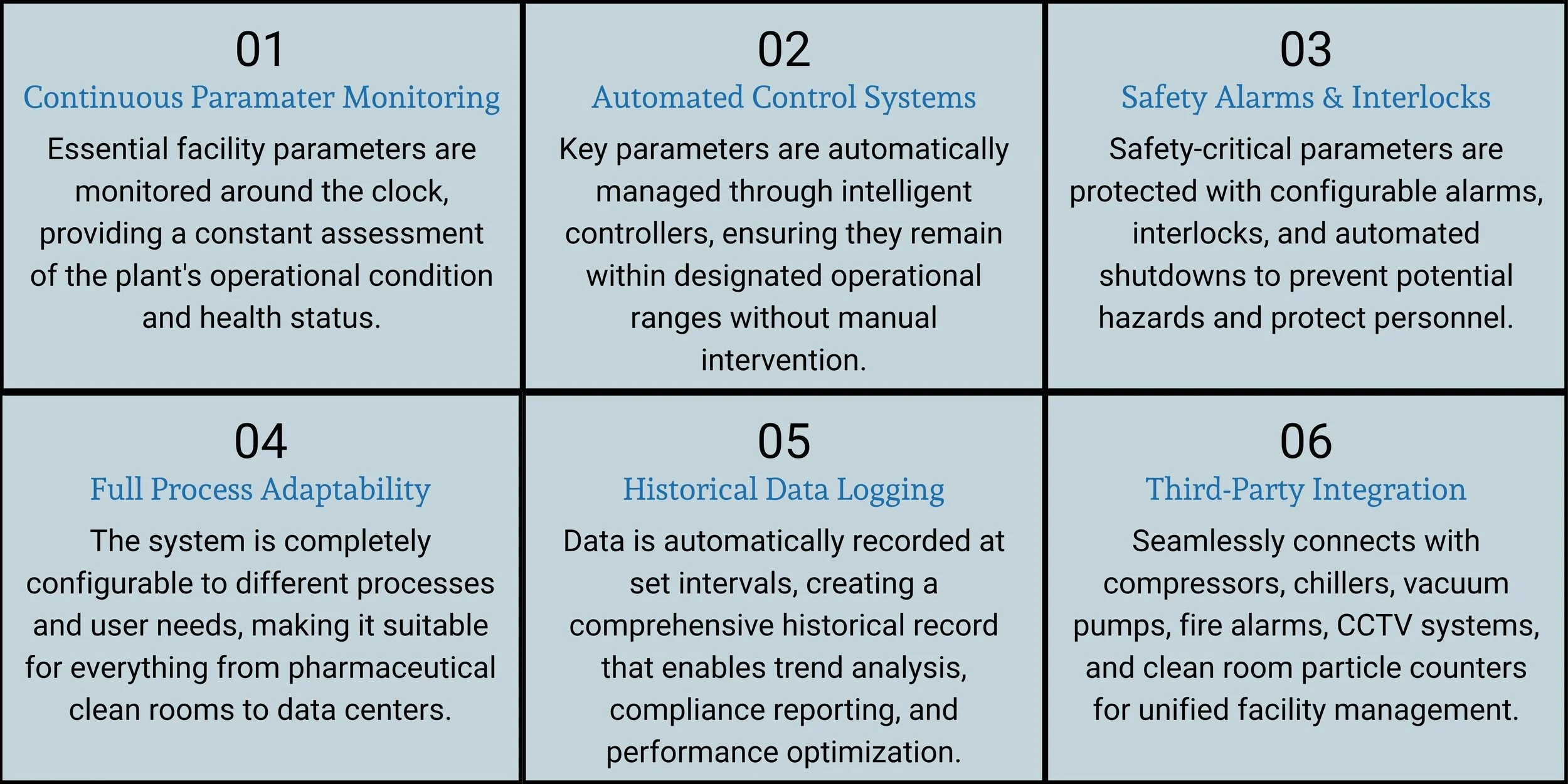
Also known as a Building Automation System (BAS), the BMS acts as the central intelligence for your entire facility — managing, monitoring, and controlling HVAC, lighting, and plumbing systems in real-time. In Clean Room environments, it is essential for maintaining critical environmental parameters with precision.
Real-time monitoring of all essential facility parameters
Automated controls keeping parameters within designated ranges
Safety alarms, interlocks, and automated shutdowns for critical systems
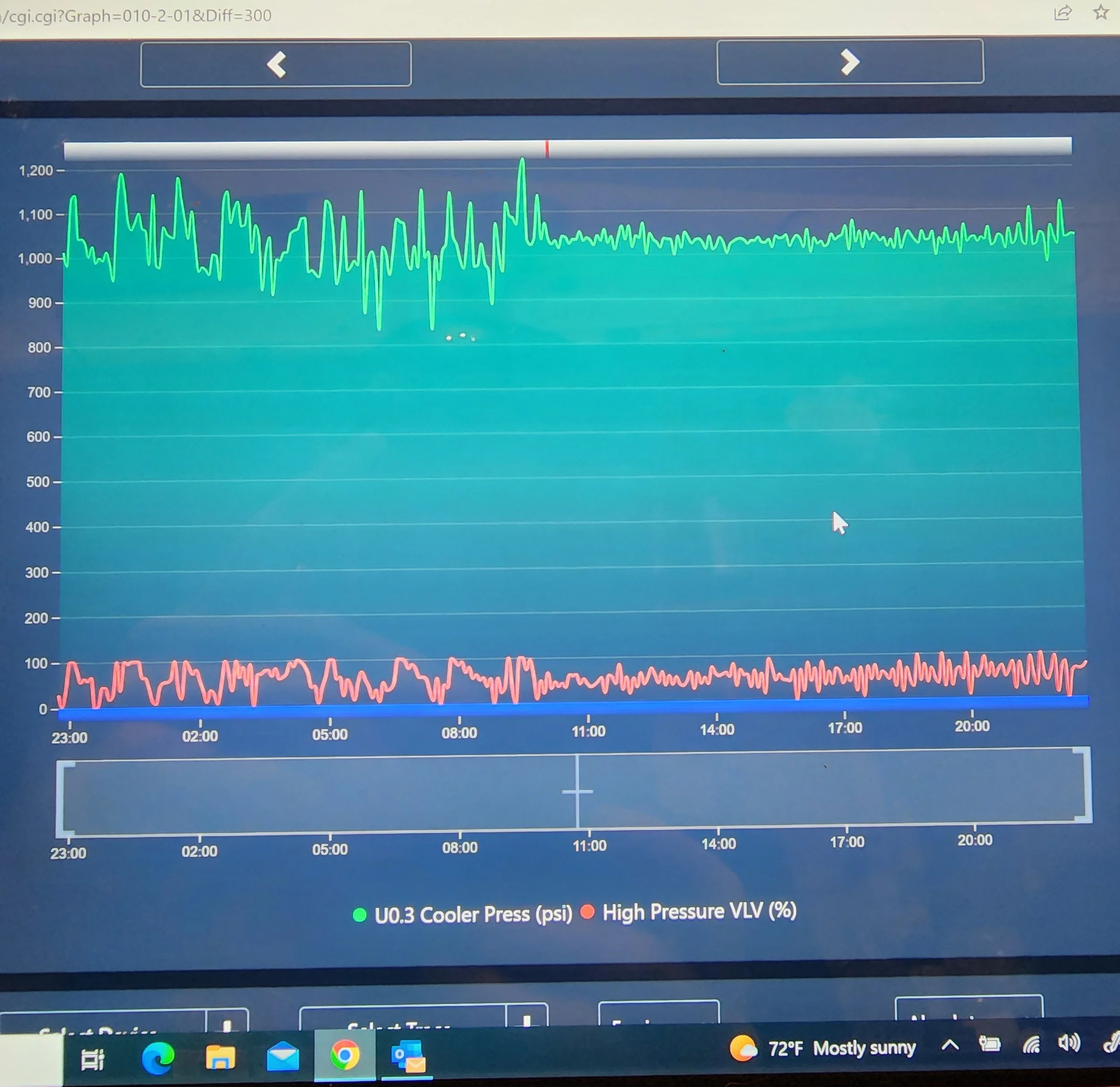
Historical data logging at configurable intervals
Intelligent graph generation for trend analysis
Fully adaptable to different processes and user requirements
CORE SYSTEMS
BMS & EMS Platforms
Two complementary systems working in tandem — one managing real-time mechanical operations, the other optimizing long-term energy performance.
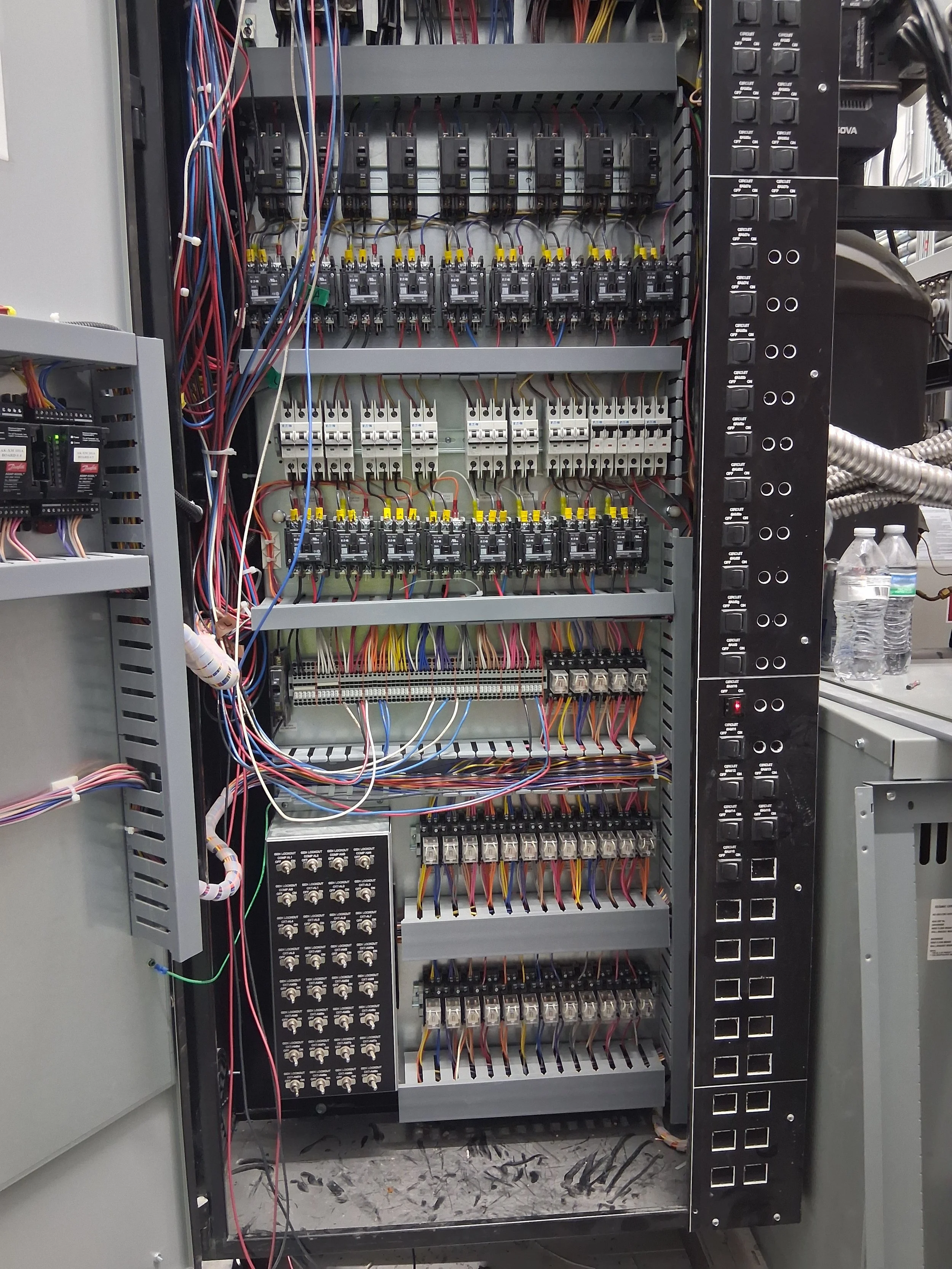
Energy Management System
EMS
Optimize Every Kilowatt
The EMS focuses on optimizing energy usage through deep data analytics, intelligent scheduling, and identifying operational inefficiencies before they become costly. It transforms raw consumption data into actionable insights that drive sustainable, long-term savings across your entire facility.
Comprehensive energy consumption tracking and reporting
Data-driven analytics to identify inefficiencies
Automated scheduling to reduce peak demand loads
Integration with BMS for unified operational oversight
Compliance reporting and sustainability benchmarking
Predictive modeling to forecast future energy demand
KEY CAPABILITIES
BMS Feature Suite
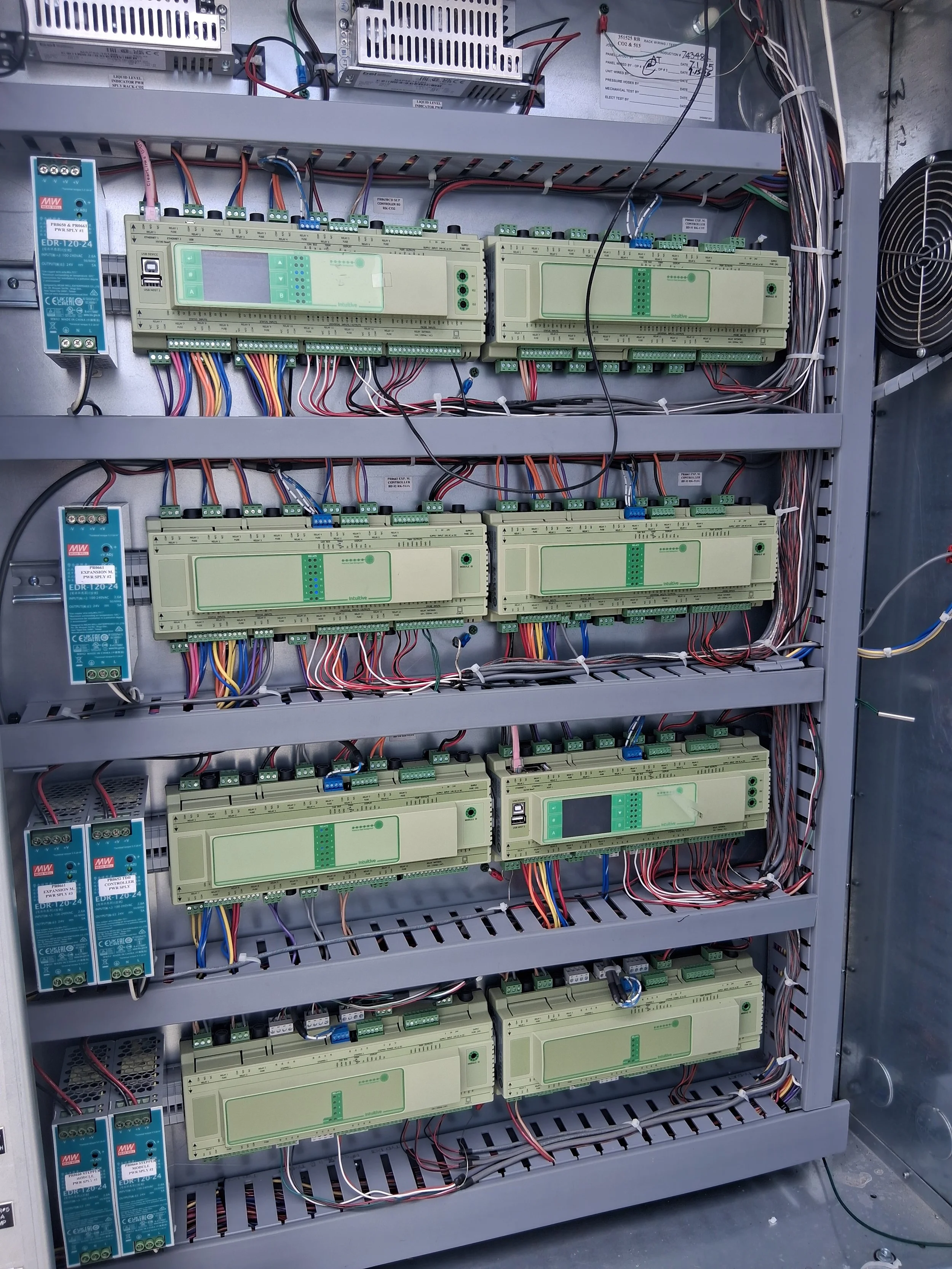
Every capability is engineered for Clean Room-grade precision, with full third-party integration support.
QUALITY ASSURANCE
HVAC Commissioning
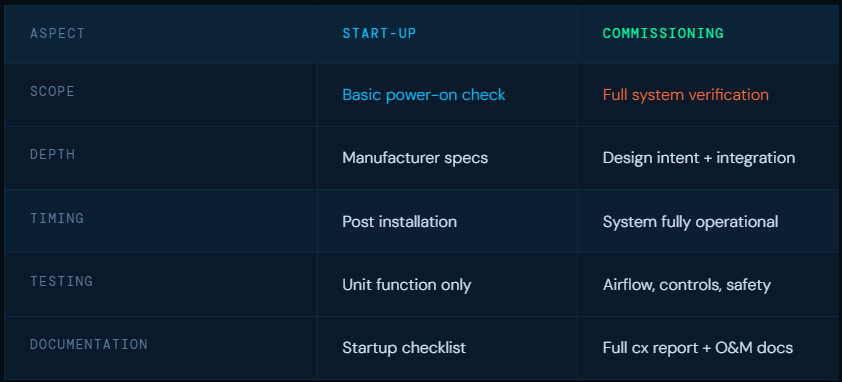
A comprehensive quality assurance process that verifies, tests, and documents that HVAC systems are installed and functioning according to the owner's project requirements and design intent — ensuring optimal performance from day one.
PROCESS STEPS
Inspections & Document Review
Verify installation against design documents, inspect equipment for shipping damage, confirm correct placement of all components, and review submittals and shop drawings for compliance.
Functional Performance Testing
Execute detailed test scripts for every system component — testing controls sequences, safety interlocks, alarm conditions, and operational modes under real-world and simulated conditions.
Airflow Balancing & Adjustments
Measure and adjust supply, return, and exhaust airflows at every terminal unit against design values. Calibrate dampers, VAV boxes, and fan drives for optimal performance and occupant comfort.
Refrigerant & Efficiency Checks
Verify refrigerant charge and confirm leak-free operation. Measure system efficiency metrics (COP, EER) and compare against design benchmarks to ensure energy performance targets are met.
Documentation & Owner Training
Compile a complete commissioning report including all test results, deficiency logs, and corrective actions. Conduct operator training and hand over O&M manuals to ensure long-term system performance.
SYSTEM ACTIVATION
Start-Up Procedures
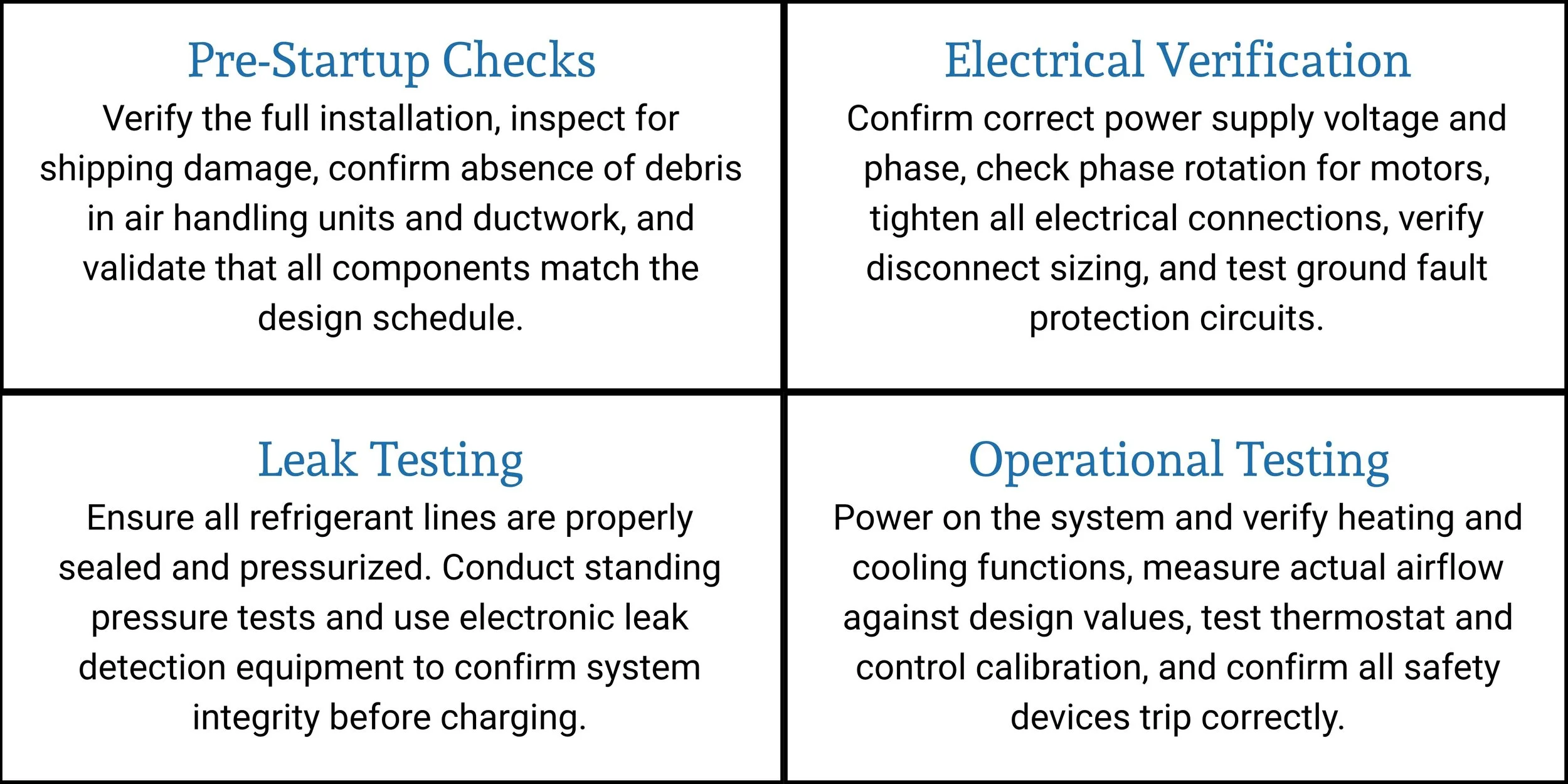
Start-up is the final installation step — a one-time event where technicians officially activate new equipment, verifying safe and efficient operation per manufacturer specifications before handover to the client.
Commission Your Smart Building
From initial BMS design through full HVAC commissioning, our team delivers systems that perform from day one — and keep performing.
READY TO BEGIN?